What to look for in an earthing product
You cannot tell from the outside whether an earthing product works. You can measure it, though, with a twenty euro multimeter. This is what we look at in the cotton, the silver thread and the plug, what the silver percentage does and does not tell you, and how to check it yourself. Including when you buy elsewhere.

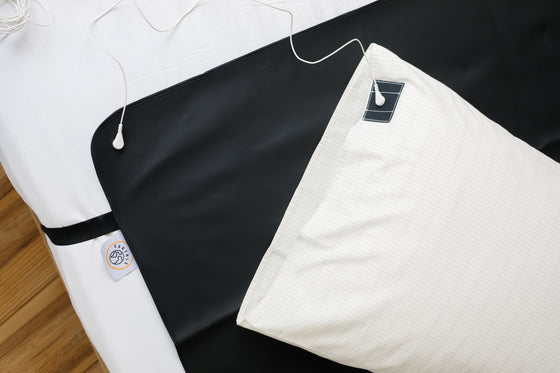
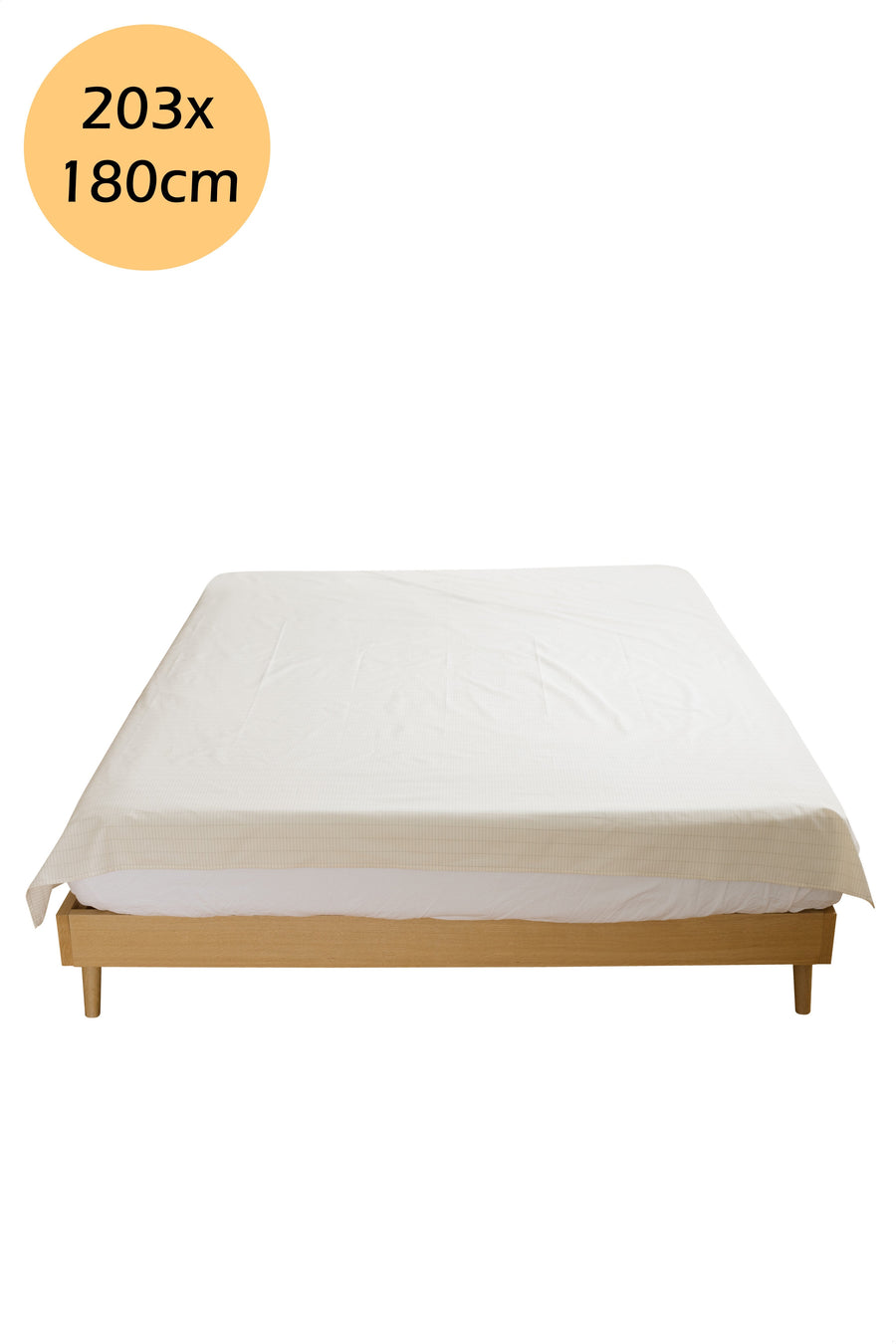
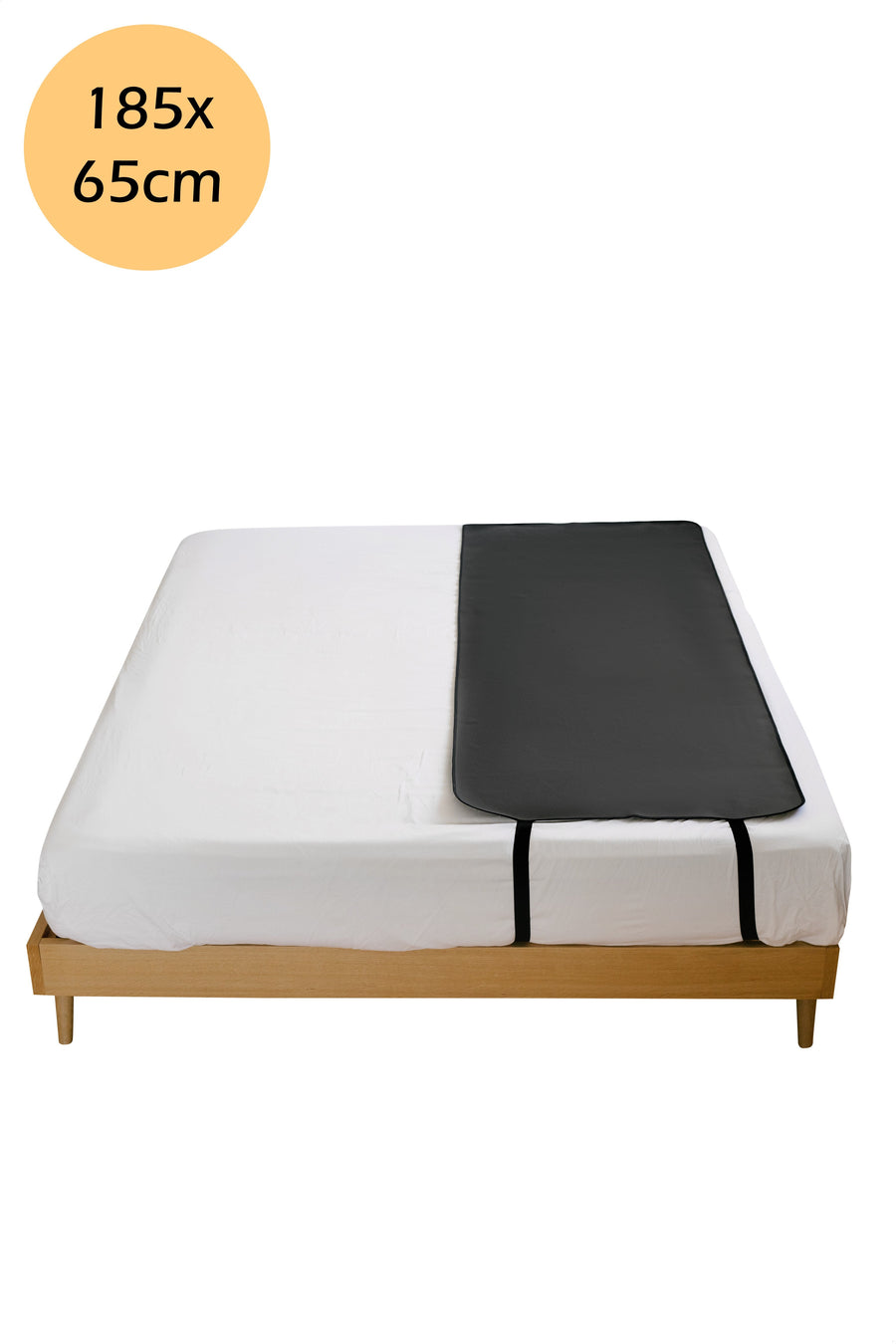
An earthing product is nothing special to look at. A sheet with a grid pattern in it, a cable and a plug. You cannot see whether it works, and that is the hard part of this market: you have to take the seller at their word.
You do not have to. Everything we sell can be measured with a twenty euro multimeter. Below is what we watch for when making these, and how you can check it yourself. Including when you buy elsewhere.
The cotton
What touches your skin all night is plain organic cotton, 95 percent of the fabric. It breathes, it feels like a sheet and it goes in the machine. There is no coating on it and no film laminated into it.
That sounds obvious, but it is not. A conductive surface is cheaper to make by spraying a layer of metal onto it. That conducts fine for the first few weeks, it sticks to your skin, and it comes off once it has been washed a few times.
The silver thread, and what the percentage does and does not tell you
Running through the cotton is a grid of silver wire, 5 percent of the fabric. Online you will find sheets that put 10 percent on the packaging, sometimes 50. That reads as better, and that is what it is there for.
It just does not work that way. Earthing happens by equalising voltage and almost no current flows in the process. Once the resistance across the fabric is low enough, you and the sheet sit at the same point, and more silver adds nothing measurable to that. What extra thread does give you is spare capacity: more paths remain if threads wear out over the years.
So the number on the packaging says something about the margin, not about whether it works. That last part is a measurement.
The two checks you can run yourself
All you need is a multimeter.
The fabric. Set the meter to resistance or to continuity. Hold one probe on the press stud and the other on the silver thread in the furthest corner. The meter should give a low value, or beep. If it reads OL or infinite, the grid is broken and the sheet makes no connection, however pretty the pattern looks.
The plug. Take the plug out of the socket. Set the meter to resistance on the 200 kΩ range. Hold one probe on the conductive surface and the other on the round earth pin of the plug. You should read around 100 kΩ. That is the safety resistor, in there in case a socket was ever wired incorrectly. If you read zero ohms, that resistor is not in there.
The manual for your product sets it out step by step. Every product that leaves here was measured the same way before it went into the packaging.
What you will run into online
Earthing has become popular, and that attracts supply nobody thought about. Things to watch for:
- A grid pattern that is printed rather than woven. It looks like silver thread and it conducts nowhere.
- A plug with no resistor in it, or one wired to all three contacts of the socket instead of the earth alone.
- Conductivity that is gone after a few washes, while nothing anywhere says how to wash the product.
- Not a word about wear, as if a sheet like this lasts forever.
What does wear out, and when
Silver oxidises. Sweat, skin oils and detergent slowly reduce the conductivity. With normal use, a sheet or pillowcase lasts about two to three years before you notice anything.
Fabric softener makes the biggest difference there, because it settles on the silver thread. Washing at 40 degrees, without bleach and without softener, keeps it good the longest. And because you can measure it, you do not have to guess when that point arrives.
We would rather tell you that up front than have you find out in two years.
Run the test yourself
If you want to know whether the difference is real: order the cheapest earthing sheet you can find and put it next to ours. Measure them both, wash them both about five times, and measure again. That is a fairer comparison than any product page, and it is exactly why you get thirty days to change your mind with us.