Knowledge base

Earthing: what can you feel and expect?

Earthing, or earthing, offers numerous health benefits such as improved sleep, reduced stress, and pain relief. The experience of earthing varies from person to person; some feel immediate results, while others feel little or nothing. However, this does not mean that earthing is ineffective; the positive effects are still present, similar to walking barefoot on grass. For those who feel too much, it is possible to gradually increase the time or use an extra sheet for added comfort. The use of our earthing products is safe thanks to the built-in resistance of 100k ohms, which prevents short circuits. Start earthing today and experience the benefits for your well-being!

Earthle aardingslaken te drogen over een dennentak in het bos

The honest summary first: some people notice something the very first night, others only after two weeks, and a proportion never consciously notice all that much. The last of those does not mean nothing is happening, because the connection is measurable regardless of what you feel of it. Below is what people mention most, why it differs from person to person, and what to do if you notice too much or nothing at all.

What people mention most

By far the most common subject is the night: falling asleep faster, waking less often, or getting up without that stiff feeling. That fits what has been measured about the cortisol rhythm, described in better sleep through grounding.

After that come muscle soreness and recovery after exertion, and a calmer feeling at the end of the day. Some people feel a light tingling in hands or feet on first contact, usually in the first few minutes and not afterwards.

These are user experiences, not research findings. What has actually been measured in studies, with year and number of participants, is in scientific evidence for grounding.

Why it differs from person to person

The difference comes down mainly to two things. First, your starting point: if you sleep well and have few complaints, there is little room to notice a difference. Second, how much contact you actually make. Eight hours with your back on a sheet is not the same as twenty minutes with your feet on a mat.

Beyond that it is simply a matter of paying attention. Sleep quality is hard to compare with last week from memory. If you wear a smartwatch or a ring, look at your sleep data for the two weeks before and the two weeks after; that tells you more than a feeling.

A layer in between is perfectly fine

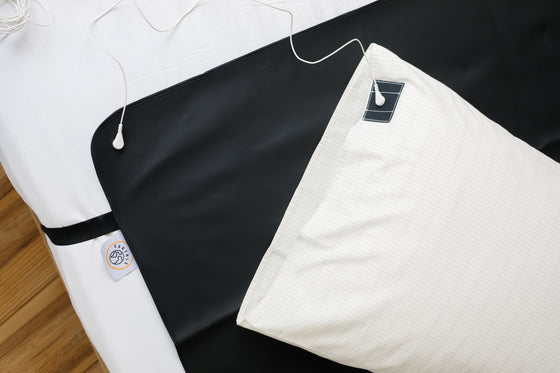
Direct skin contact conducts best, but it is not required. Pyjamas, an ordinary fitted sheet over the sheet or the sleeping mat, or a duvet cover still conducts, because your skin always gives off a little moisture.

Plenty of people choose that deliberately. Vegan leather can feel cool, and a fitted sheet over it takes that away. You perspire at night, and an ordinary sheet or cover is easier to wash, and washed more often, than the earthing product itself. And if you want to build up gently, such a layer dampens the contact without removing it.

The effect does drop as the fabric gets thicker and drier. Through a thin cotton sheet or pyjamas it works fine; through a thick fleece blanket, very little happens.

If you notice too much

A small proportion of people find the first few nights restless, or lie awake when they normally would not. The fix is simple: build up rather than going straight to a full night.

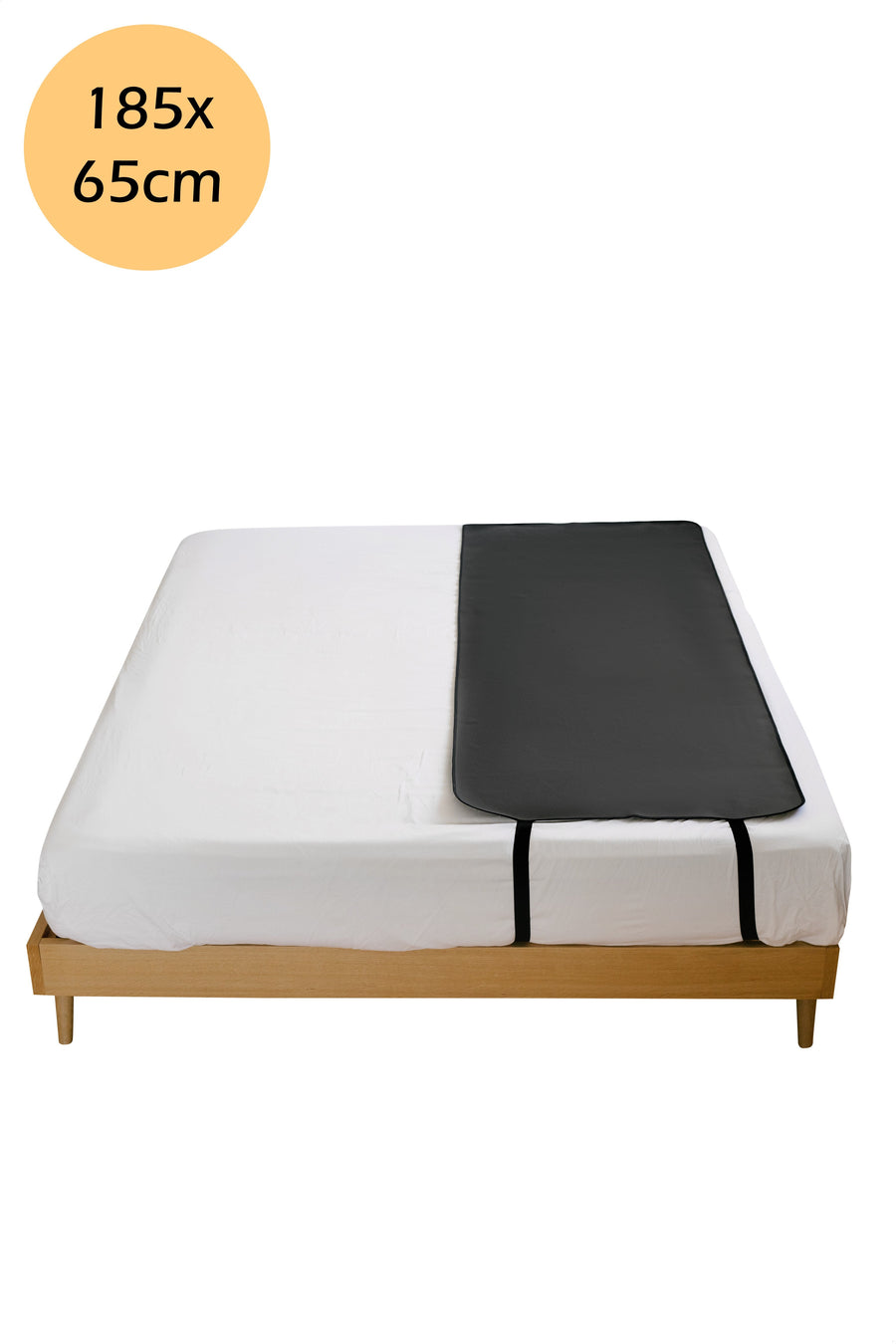
Start with twenty minutes, feet on a mat, and extend that over a week or two. If you sleep on a sleeping mat or a sheet, put an ordinary fitted sheet over it. That dampens the contact without removing it, and you can take it off again later if you want to. Or just leave it there, because it works perfectly well through it.

If you notice nothing

Then check four things before concluding it does not work.

First the socket: is there actually an earth connection? A socket tester costing a few euros answers that in two seconds. Second, the contact itself: a thin sheet or pyjamas in between is no problem, but with a thick duvet or a fleece blanket between you and the surface, very little happens. Third, washing: fabric softener leaves a film on the fibres that works against conductivity. And fourth, time: two consistent weeks is a fairer test than three nights.

Measuring instead of feeling

Feeling is subjective, measuring is not. With a twenty euro multimeter you can check in two minutes whether your setup does what it should.

Set the meter to AC volts, hold one probe between your fingers and put the other into the soil outside. Read the value: usually a few hundred millivolts. Then lie or sit on your earthing product and read again. If that value drops to almost nothing, the connection is there, whatever else you may feel.

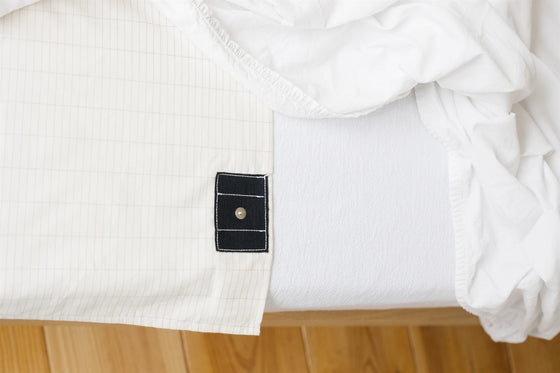
To check the product itself, set the meter to resistance and measure between the earth pin of the plug and the conductive surface. You should see about 100,000 ohms: that is the built-in safety resistor. If you read close to zero there, that resistor is missing and something is wrong with the cable. We test every product with a multimeter before it leaves us.

Read on

How the connection works technically is in grounding: safe and effective. If you are just starting out, grounding for beginners takes you through the practical side step by step.

If you do not yet know which product suits you, at the bottom of the shop page there is a guide that works through it in a few short questions. You have thirty days to change your mind, so you can simply try it for a few weeks and see for yourself what happens.