Earthing and Stress Reduction: How to Bring Calm into Your Life
Grounding helps reduce stress by normalizing cortisol levels, improving sleep, and reducing inflammation. It also enhances mental clarity. Whether you're walking outside or using grounding products, the benefits are accessible to everyone. Discover the power of grounding today!

Stress is not a feeling but a state of your body: your heart rate sits higher, your muscles stay switched on, and your stress hormone cortisol stays up at moments when it should be down. Grounding does not intervene in your diary or your workload. What it does do is measurable in that same state. Below is what has been studied and how to fit it into a normal day.
Cortisol and the daily curve
Cortisol is supposed to follow a rhythm: high in the morning, low in the evening and at night. Under sustained stress that curve flattens or shifts, and then you keep running in the evening while you are tired.
In 2004 Ghaly and Teplitz had twelve people with sleep complaints sleep grounded for eight weeks. Their cortisol fell at night and its release across the day returned to the natural 24-hour rhythm. They themselves also reported less pain and better sleep. The study appeared in the Journal of Alternative and Complementary Medicine.
Mood, with a control group
The strictest trial on this point comes from Chevalier in 2015. Forty people sat for an hour, half genuinely grounded and half apparently so, with nobody knowing who had which. Only in the genuinely grounded group did mood improve significantly. Published in Psychological Reports.
That is exactly the design you want to see: if nobody knows who is grounded and the difference holds, it is not coming from expectation. In 2017 Passi saw vagal tone rise by 67 percent in twenty-six premature babies as soon as the grounding was connected, published in Neonatology. Vagal tone is the measure of how strongly your recovery mode is switched on.
All the studies, with year and number of participants, are collected in scientific evidence for grounding.
Twenty minutes outdoors
The cheapest version costs you nothing: shoes off on grass, sand or damp soil. Twenty minutes is enough to notice something, and damp ground works better than bone-dry sand. There is more on that in walking barefoot outdoors.
The drawback is familiar: for a large part of the year it is not an option, and on the busiest days you never get round to it.
During the day, while you are sitting anyway
That is why grounding indoors works better for most people: it costs no extra time. A desk mat sits under your forearms while you type; a yoga mat goes under your bare feet beneath the desk or during your exercises. An hour is already worthwhile.
The biggest lever, though, is at night, simply because you then get seven or eight uninterrupted hours of contact without doing anything for it. What is known about that, and what customers write, is in better sleep through grounding.
Where to start
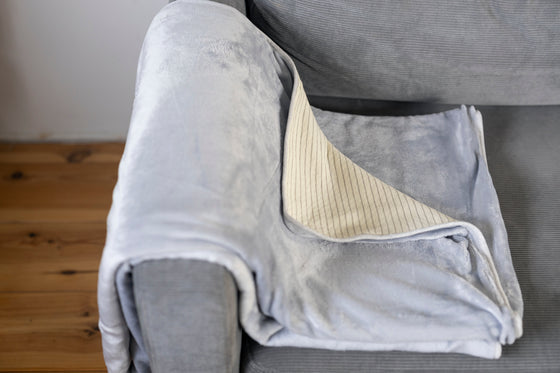
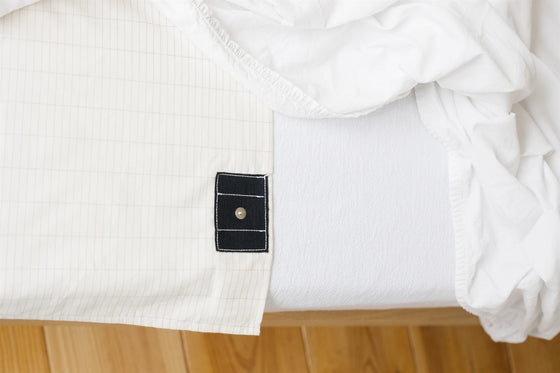
If you want to start during the day, the desk mat is the obvious first step. If you want the night straight away, then the sheet, the sleeping mat, or as the smallest step the pillowcase. Unsure about size or your situation? At the bottom of the shop page there is a guide that asks you exactly that in a few short questions.
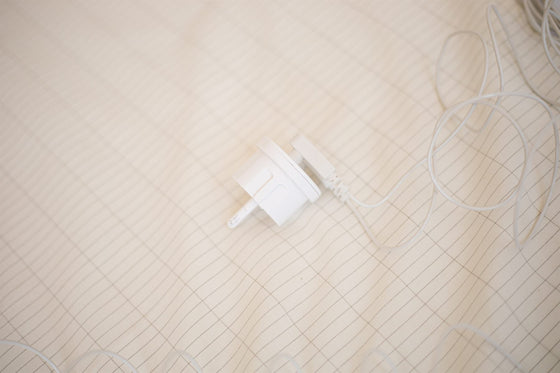
If the room has no earthed socket, it still works, through an earthing rod or an alligator clip. Both are set out step by step in grounding without an earthed socket.
Earthle does not sell medical devices and does not replace treatment. If you have health complaints, take medication, are pregnant or have an implant, talk to your doctor first. You have thirty days to change your mind, so you can try it for a few weeks and see for yourself what it does.