How to test a grounding mat with a multimeter: checking the whole connection
An outlet tester and multimeter show whether the earth, cable and product surface form one working connection. This gives your Earthle routine a reliable foundation.

You do not need to judge electrical function by sensation. The chain has three parts: a functioning protective earth, a cable with a safety resistor and a conductive product surface. Testing each part separately also identifies where a fault sits.
Start safely at the wall outlet
Use an approved outlet tester for your country or ask an electrician to verify the protective earth. Never put loose probes, wires or improvised connectors into a live wall outlet. Visible earth contacts can still be incorrectly wired or disconnected.
Electrical grounding is an established principle. The electronics industry uses it under the IEC 61340 series to control potential differences and electrostatic discharge. That supports the electrical mechanism, not a health outcome.
Test one checks the cable resistor
- Remove the grounding plug completely from the outlet.
- Set the multimeter to resistance on a range above 100 kΩ.
- Measure between the plug's earth contact and the metal snap at the product end of the cable.
- An Earthle cable should read about 100 kΩ because that resistor is built into the plug.
OL or infinity indicates an open circuit. A reading close to zero does not match the specified Earthle cable and means it should not be used. Allow for meter and resistor tolerance; exactly 100,000 ohms is not required.
Test two checks the conductive surface
Keep the wall plug disconnected. Select continuity or a low resistance range. Put one probe on the product snap and the other on several areas of silver thread or mat. A low finite reading shows a conductive path. A textile grid may produce different readings at different points.
Check the far corners, not only the area beside the connector. This can expose a broken thread or worn surface. Repeat after washing or when performance appears to change.
Test three checks the full setup
A body-voltage comparison can show whether contact with the product lowers mains-frequency voltage on the skin. In a neonatal intensive-care study, measured skin voltage fell by about 95 percent when electrical grounding was connected. That is evidence of an electrical effect, not a general health benefit.
Follow only the Earthle instructions and use undamaged equipment. Compare a reading without contact to one with a hand, arm or bare foot on the product. A clear fall supports that the chain is working. Absolute values vary by room, wiring and body position.
Common reasons a reading does not fall
- The outlet has no functioning protective earth.
- The snap is loose or the cable is broken internally.
- A thick, dry or synthetic layer insulates skin from the product.
- Fabric softener, oil or dirt coats the conductive textile.
- The multimeter is on the wrong function or range.
Use a grounding pin only as instructed and in a suitable location. Do not assume every radiator or metal pipe is earthed; plastic pipework can interrupt the path. An electrician should resolve uncertainty about household wiring.
A good measurement confirms electrical contact. You then know your setup is ready for consistent daily use.
Which Earthle product fits this use
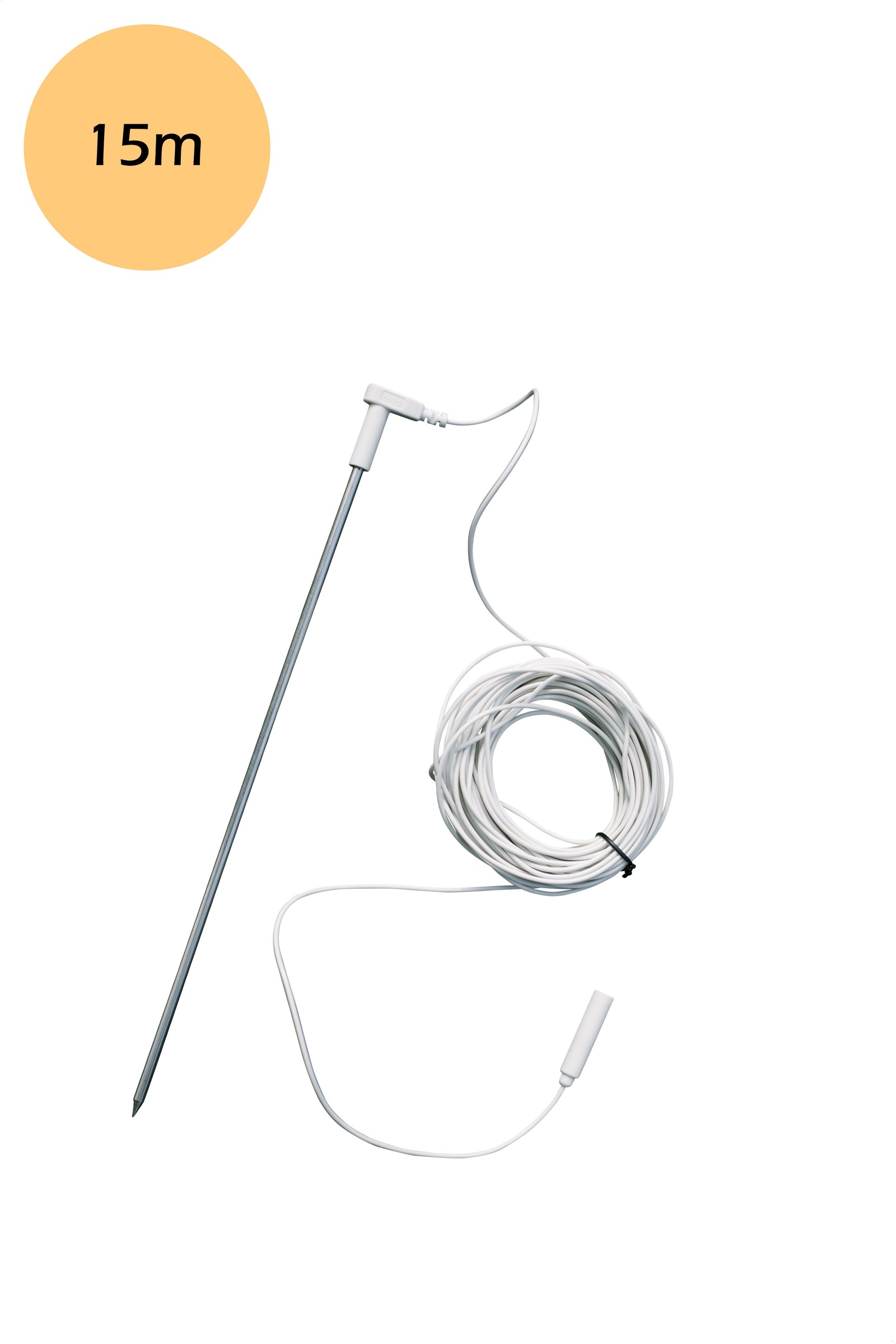
A separate Earthle Plug and Cable can replace a damaged lead or provide another connection and includes a specified 100 kΩ resistor. Test the replacement cable before putting the product back into use. For a room without a grounded outlet, a correctly installed Earthle Grounding Pin creates a direct outdoor route.
View cables and grounding accessories
Sources
- Passi et al., Neonatology, 2017
- IEC 61340-5-1
- Earthle, Plug and Cable product information
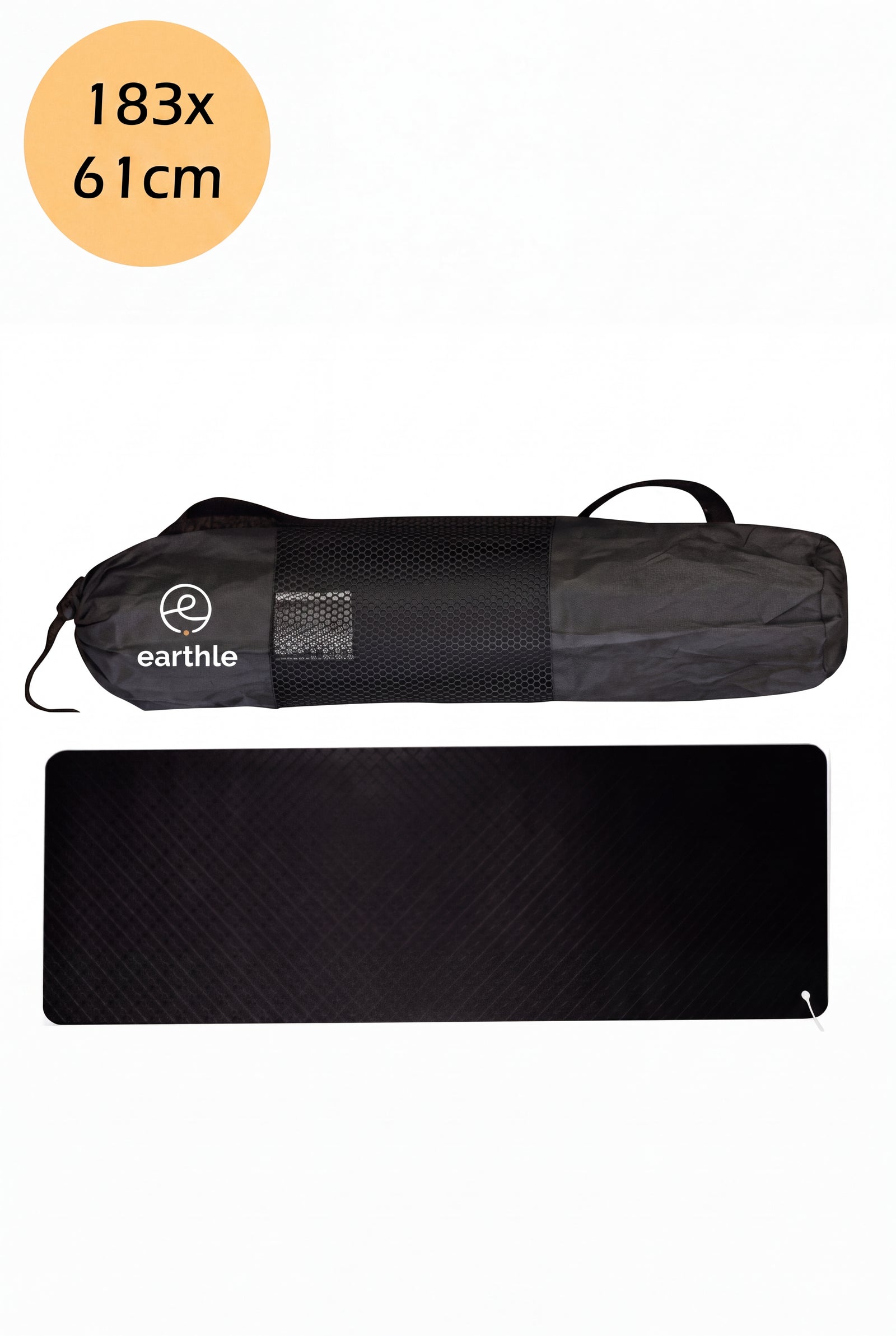
- Earthle, Earthing Sheet product information
Further reading: What to look for in a grounding product · Grounding safety
Sources
- Passi et al., Neonatology, 2017 Bij zesentwintig te vroeg geboren baby's zakte de huidspanning van 415 naar 19 millivolt zodra de aarding werd aangesloten; de meting is objectief, maar de groep is klein en het gaat om een kortetermijneffect, niet om een gezondheidsuitkomst.
- IEC 61340 (Electrostatics-normenreeks) Deze internationale normenreeks beschrijft eisen aan het aarden van personen en materialen om elektrostatische ontlading te voorkomen, zoals bij de antistatische polsband in de elektronica-industrie; ze onderbouwt de elektrotechniek van aarden, niet een gezondheidseffect bij mensen.
All links checked on September 10, 2026.